
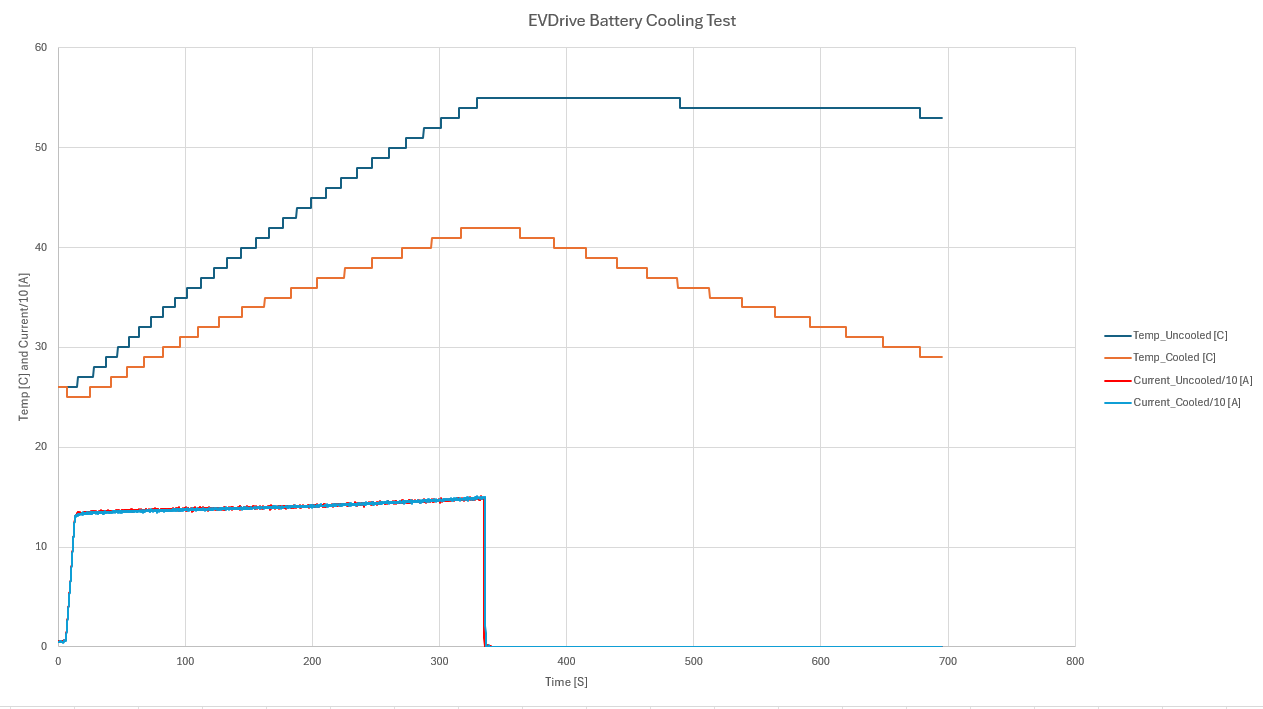
Liquid-cooled vs air-cooled EV battery packs come down to one question: how much heat does the pack need to move, and how fast. A liquid-cooled pack circulates coolant through plates or tubes in direct thermal contact with the cells, so it removes heat quickly and holds a tight temperature spread under high power and fast charging. An air-cooled pack moves heat with airflow over the cells, which is simpler, lighter, and cheaper, but limited when loads run high or sustained. For premium performance and demanding duty cycles, liquid cooling almost always wins. For lighter, lower-power applications, a well-engineered air-cooled pack can still be the right call.
Key takeaways
- Liquid cooling moves heat far faster and holds a tighter cell-to-cell temperature spread, which protects pack life under load.
- Air cooling is simpler, lighter, and lower cost, and works well for low continuous power and light-duty cycles.
- Fast charging and sustained high power are where liquid cooling separates itself, because the BMS can hold higher limits longer before it has to derate.
- Cooling and the BMS are partners. Good thermal design lets the management system spend less time protecting the pack and more time delivering performance.
How air cooling works, and where it stops
Air-cooled packs rely on moving air, sometimes passive, often forced by fans, to carry heat away from the cell surfaces. The appeal is real: fewer parts, no coolant loop, no pumps or cold plates, lighter weight, and lower build cost. For a light vehicle, a modest power band, or a duty cycle that never asks for much current at once, that simplicity is an advantage rather than a compromise.
The ceiling shows up under load. Air carries far less heat per unit volume than liquid, so as current climbs the cells in the worst airflow positions run hotter than the rest. That uneven temperature spread is the real problem. When part of a pack runs hot while another part stays cool, the cells age and drift apart, and the whole pack is limited by its weakest, hottest region.
How liquid cooling changes the math
Liquid cooling puts coolant in close thermal contact with the cells through plates or tubing, then pumps the heat out to a radiator or chiller loop. Because liquid absorbs and carries far more heat than air, it pulls energy out of the pack quickly and keeps every cell within a narrow temperature band. That tight spread is what protects long-term capacity and keeps the pack balanced cycle after cycle.
It is also what unlocks performance. Under sustained high power or repeated fast charging, heat builds faster than air can shed it. Liquid cooling keeps temperatures in range so the system can hold higher current for longer. EVDrive applies this principle in custom battery architecture, integration, and validation work: keep the cells cool and even, and the rest of the pack can work harder with margin to spare.
Fast charging, sustained power, and pack life
Three demands expose the difference. Fast charging dumps energy in quickly and generates heat the cells cannot shed on their own; liquid cooling removes it fast enough to hold the charge rate before the system has to throttle. Sustained high power, the kind a motorsport or performance program sees lap after lap, produces continuous heat that air struggles to keep ahead of. And pack life depends on holding cells at even temperatures, because mismatched cells age unevenly and the pack loses usable capacity sooner.
This is where cooling and the BetterBMS management system work together. The BMS protects the pack by limiting current when temperatures rise, but it cannot remove heat. With strong liquid cooling, the management system spends far less time derating and far more time delivering full performance, because the thermal design is doing its share of the work.
Which one is right for your application
Choose air cooling when the application is light, the continuous power is modest, fast charging is occasional, weight and cost matter most, and the duty cycle gives the pack time to recover. Choose liquid cooling when the pack must sustain high power, fast charge repeatedly, hold a tight temperature spread, or live in a demanding thermal environment. Most premium performance programs, OEM integrations, and motorsport builds land on liquid cooling because the duty cycle leaves no room for thermal throttling.
The honest answer is that it depends on the load, the charge profile, and the environment the pack lives in. That is exactly the conversation worth having before a single cell is specified. If you can share the application and target specs, an EVDrive engineer can tell you which thermal approach fits and why. Request a quote and we will start there.
FAQ
Is a liquid-cooled battery pack always better than an air-cooled one?
No. Liquid cooling wins when a pack must sustain high power, fast charge repeatedly, or hold a tight cell temperature spread. For low continuous loads, light vehicles, and cost-sensitive builds, a well-designed air-cooled pack can be the smarter choice.
Does liquid cooling let an EV battery fast charge faster?
It usually helps. Fast charging generates heat the cells cannot shed on their own, and liquid cooling removes that heat quickly enough to hold charge rates higher for longer before the BMS has to throttle to protect the cells.
Why does cell-to-cell temperature spread matter so much?
Cells that run at different temperatures age at different rates and drift in state of charge, which shortens usable pack life and capacity. A tight temperature spread keeps the pack balanced, and liquid cooling makes that spread much easier to hold under load.
Can the BMS make up for a weaker cooling design?
Only partly. The BMS protects the pack by limiting current when temperatures climb, but it cannot remove heat. If the thermal design cannot keep up, the BMS simply derates performance. Good cooling and a good BMS work together, not as substitutes.