
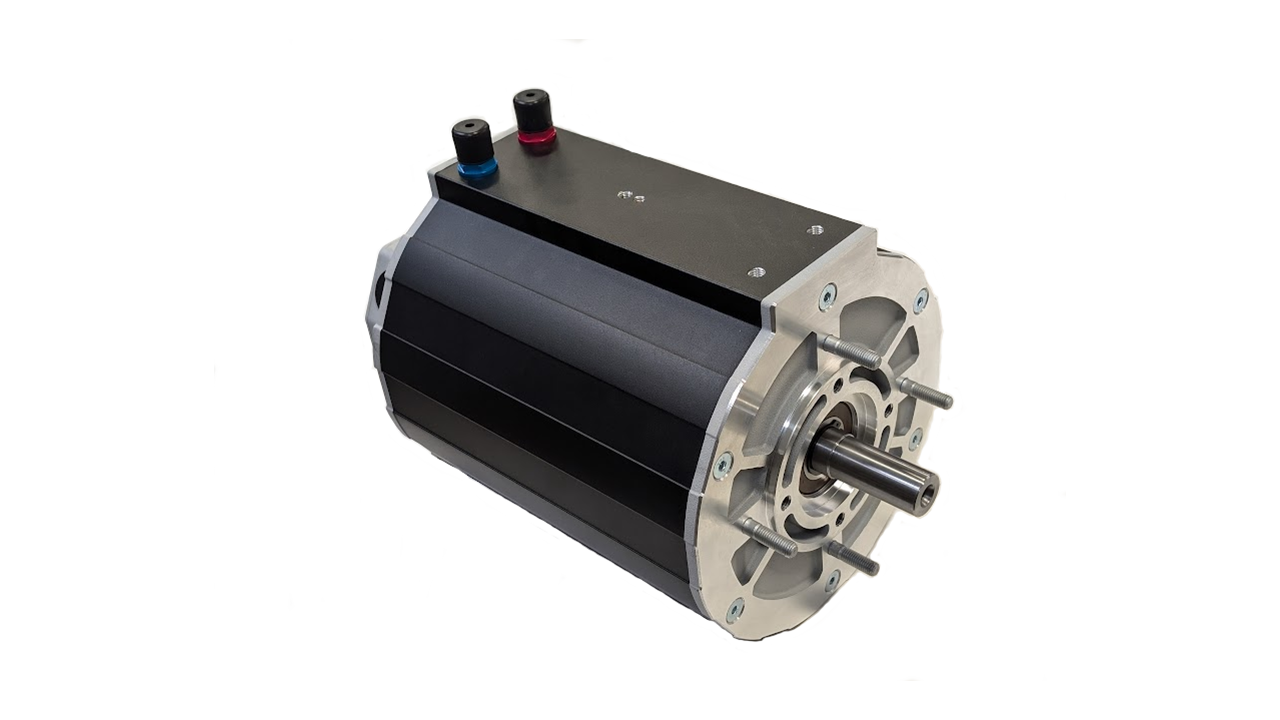
EV powertrain engineering is the discipline of turning stored electrical energy into controlled motion, and it spans the battery, the battery management system, high-voltage distribution, the inverter, and the motor. Every one of those layers has to agree with the others on voltage, current, and heat. When they do, the vehicle delivers its rated performance lap after lap. When they do not, the powertrain protects itself by cutting power, and the spec sheet stops being true.
The short version: a good EV powertrain is not a collection of strong parts, it is a matched system. The battery and BMS set the real ceiling, and the rest of the drive system is engineered to live inside it.
Key takeaways
- The EV powertrain is one tuned system: battery, BMS, inverter, and motor, plus thermal and control layers.
- The battery pack and BMS define the true performance ceiling, not the motor alone.
- Sustained output, fast charging, and lifespan all depend on cell selection and thermal design.
- Matching components to the application beats forcing off-the-shelf parts to fit.
The layers of an EV powertrain
Reading the energy path from source to wheel makes the dependencies clear. The battery pack stores energy and supplies high-voltage DC. The battery management system measures every cell, balances them, enforces safe limits, and reports state of charge and state of health. High-voltage distribution, contactors, and fusing route that energy safely. The inverter converts DC into the three-phase AC the motor needs and modulates it thousands of times a second. The motor turns current into torque. Wrapping all of it is a thermal system and a layer of control software that keeps the parts inside their windows.
The point of engineering the powertrain as a whole is that no layer can be optimized in isolation. A motor rated for high peak torque is meaningless if the pack cannot deliver the current, or if the BMS has to derate to protect the cells.
Why the battery and BMS set the ceiling
It is tempting to judge an EV by motor power, but the battery decides what the motor can actually do. Peak power, sustained power, fast-charge rate, and cycle life all trace back to the cells, how the pack is built around them, and how the BMS manages them. EVDrive's experience with premium 21700 cells and liquid-cooled battery systems informs its custom system design work, because cell quality and cooling are what let a pack hold output instead of fading after a few hard pulls.
The BMS is the difference between a pack that survives an aggressive duty cycle and one that limps. Accurate per-cell voltage and temperature sensing lets the system run closer to the real limit with less guard band, which means more usable power. Tight balancing keeps the weakest cell from capping the whole pack early. This is the engineering behind the BetterBMS: measure precisely, protect intelligently, and give the rest of the powertrain room to perform.
Thermal design is the quiet performance lever
Heat is what separates a peak number from a repeatable one. Cells, inverter, and motor all lose efficiency and life as they get hot, and every protection limit in the system is ultimately a temperature limit. A powertrain that looks strong on a single launch but derates on the second lap is almost always thermally constrained.
This is why liquid cooling, sized for sustained load rather than a brochure figure, matters so much in a performance pack. Engineering the cooling path alongside the cells (rather than bolting it on afterward) is what lets the BMS keep contactors closed and power flowing when a lesser pack would have already pulled back to save itself.
Matching the system to the application
A road car, a motorsport program, and an OEM platform ask different things of a powertrain: different voltage, footprint, power band, and duty cycle. Engineering the battery and BMS to the motor and inverter, instead of forcing a generic pack to fit, is where real performance is found. In-house design means the module geometry, pack voltage, cooling, and BMS configuration can be specified to the target rather than compromised toward it. When a powertrain is matched end to end, the parts stop fighting each other and the system delivers what it was rated to deliver.
FAQ
What does EV powertrain engineering include?
It covers the full chain that turns stored energy into motion: the battery pack, the battery management system, high-voltage distribution and contactors, the inverter, and the electric motor, along with the thermal and control systems that tie them together.
Why does the battery and BMS matter most in an EV powertrain?
The battery and BMS define the powertrain's real limits. Available power, sustained output, fast-charge capability, and lifespan all trace back to cell selection, pack construction, thermal design, and how accurately the BMS measures and protects each cell.
How is a performance EV powertrain different from a standard one?
Performance powertrains are built to hold output, not just hit a peak number. That means tighter cell matching, liquid cooling sized for sustained load, and a BMS that manages aggressive duty cycles without prematurely limiting power.
Can powertrain components be engineered to a specific application?
Yes. Modules, packs, and BMS configuration can be specified to a target voltage, power band, footprint, and duty cycle. In-house engineering lets the battery and management system be matched to the motor and inverter rather than forced to fit. You can start a quote conversation with your target specs.