
An EV BMS buyer guide should start with one honest point: the spec sheet is the easy part. When you are choosing a battery management system, the numbers that print well (channel count, voltage range, communication protocol) tell you almost nothing about how the unit behaves the moment a cell drifts, a connector loosens, or current spikes on a hard pull. The features that decide pack safety, longevity, and uptime live in the engineering behind the spec, and that is exactly where this guide focuses.
Direct answer: Look beyond the spec sheet at four things a datasheet rarely captures: how the BMS detects and responds to faults, how it balances cells under real load, how tightly it is matched to the actual pack and cells, and what kind of engineering support stands behind it. Those four decide whether a system protects your investment or just monitors it.
Key takeaways
- Spec sheets describe capability, not behavior. Evaluate fault response, not just feature lists.
- Cell balancing strategy drives usable capacity and pack life more than headline numbers do.
- A BMS matched to its pack and cells removes integration risk a generic unit pushes onto you.
- Post-purchase engineering support is part of the product, not an afterthought.
Safety and fault logic come first
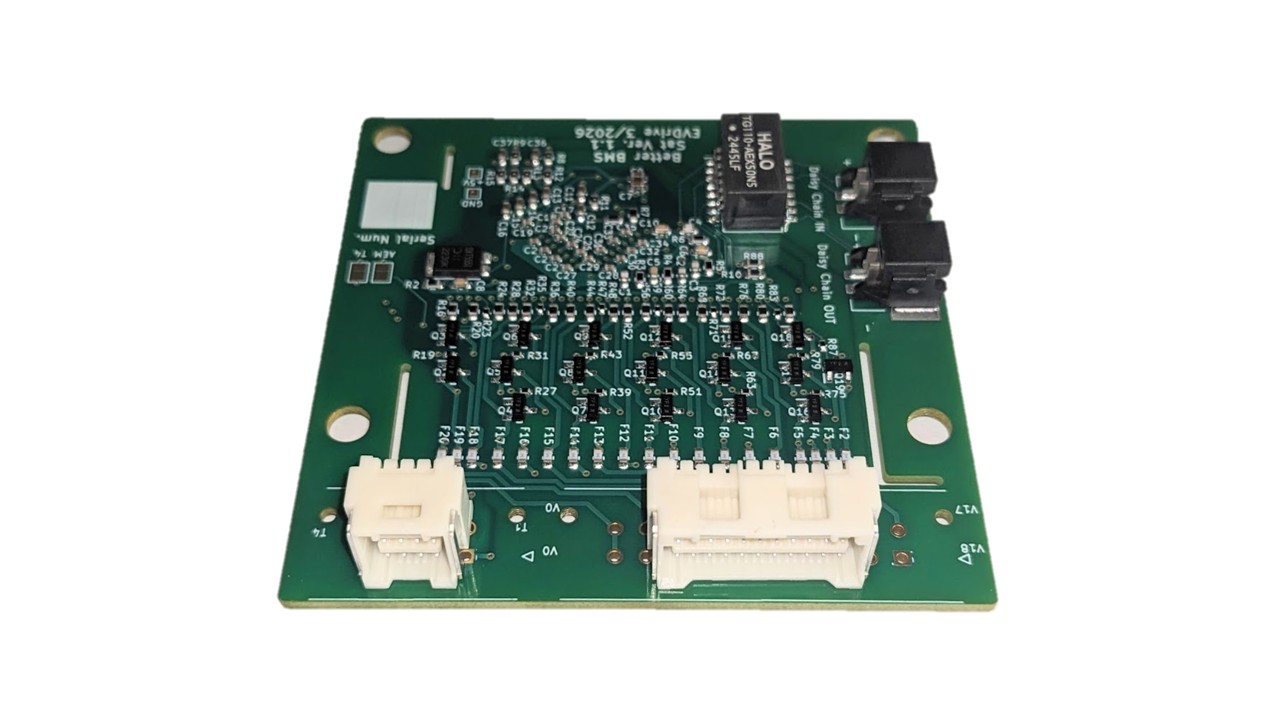
Every BMS claims protection against overvoltage, undervoltage, overcurrent, and over-temperature. The difference is what happens in the milliseconds after a limit is crossed. Ask how the system detects a fault, how it isolates the problem, and how it reports the event so you can act on it. A protection threshold printed on a datasheet means little without a defined, tested response path behind it. Request evidence from validation testing rather than taking the limit value at face value. The BetterBMS was built around this idea: deterministic fault handling and clear reporting, because a number on a page does not keep a pack safe, the logic underneath it does.
Cell balancing decides real-world life
Balancing is where a lot of buyers get surprised. Two systems can list identical cell counts and voltage windows, yet deliver very different usable capacity and very different pack life over hundreds of cycles. Confirm the balancing approach, the balancing current it actually supports, and whether balancing is active during the conditions your application sees, not just at rest on a bench. For performance and motorsport programs, where packs are pushed hard and recovered quickly, weak balancing shows up as capacity you paid for but cannot use. Strong balancing is quiet, continuous, and matched to how the pack is worked.
Match to the pack, not just to the protocol
A BMS reaches its potential when its limits, sense points, and thermal model line up with the cells and the pack architecture it manages. Generic units leave that matching to you, and the integration guesswork (sense lead routing, thermal placement, current calibration) becomes your problem and your schedule risk. EVDrive approaches BMS configuration as part of the complete battery architecture. In the company's 21700-based module and liquid-cooled pack work, the battery system was developed with the BMS in the loop, so the thermal behavior the BMS expected was the thermal behavior the pack delivered. That alignment is hard to see on a spec sheet and very easy to feel in a deployment.
Integration, data, and the long tail
The BMS does not live alone. It talks to a vehicle controller, a charger, and often a wider telemetry stack, and it has to keep talking cleanly for years. Look at how the system exposes its data: are state of charge, temperatures, and fault history available in a form your team can actually use, or buried behind a closed interface? Confirm how firmware updates are delivered and whether field data flows back in a way that helps you improve the next build. A BMS is a multi-year relationship with your pack, so the quality of its data and its update path matters as much as its startup specs.
Support is part of the spec
When a fault code is ambiguous at 11pm before a delivery, the most valuable feature is a person who built the thing answering the phone. Ask who responds, how fast, and whether you reach engineering or a ticket queue. A premium tier is not just better hardware, it is the assurance that the people who designed the system will help you when an edge case appears that no datasheet predicted. That support is invisible in a feature comparison and decisive in production.
A short checklist before you buy
Use these questions to pressure-test any BMS, including ours. How does it detect and respond to each fault class, and where is the test data? What balancing current does it deliver under load? Is it matched to the specific cells and pack, or generic? How is its data exposed and how are updates handled? Who answers when something is unclear? If a vendor cannot answer these plainly, the spec sheet is doing more work than the engineering. When you are ready to compare against a system built and matched in-house, you can start a quote conversation and tell us the application and target specs.
FAQ
What is the most important thing to check when buying an EV BMS?
Verify how the BMS handles safety and fault response under real conditions, not just its advertised channel count or voltage range. Ask how it detects, isolates, and reports faults, and request evidence from validation testing.
Does cell balancing method matter in an EV BMS?
Yes. Balancing strategy affects usable capacity, pack longevity, and how quickly a pack recovers between cycles. Confirm the balancing approach, the current it supports, and whether it is active during the conditions your application actually sees.
Should a BMS be matched to the battery pack?
A BMS performs best when its limits, sense points, and thermal model match the cells and pack architecture it manages. A BMS engineered alongside the pack removes the integration guesswork that generic units leave to the buyer.
How do I evaluate BMS support after purchase?
Ask who answers when a fault code is unclear or firmware needs a change. Confirm whether you reach the engineering team, the expected response time, and how field data and updates are handled over the product life.