
For most high-performance EV batteries, the 21700 cell is the better default because it packs more energy into each cell, which means fewer cells, fewer welds, and fewer interconnects to reach a target capacity. The 18650 still earns its place where packaging is tight or where a specific high-output 18650 chemistry fits the discharge profile better. The right call comes down to your geometry, your power demand, and how the pack is cooled and managed.
Both names describe cylindrical lithium-ion cells by their physical size. An 18650 is 18 mm in diameter and 65 mm tall. A 21700 is 21 mm in diameter and 70 mm tall. That small difference in dimensions changes a lot at the pack level, which is why the 21700 vs 18650 question is one of the first decisions in any performance battery program.
Key takeaways
- The 21700 stores more energy per cell, so a pack hits target capacity with fewer cells and fewer joints.
- The 18650 has a longer, deeper track record and a wider catalog of high-output chemistries.
- A larger cell has more internal volume per unit of surface area, so thermal design and cooling matter more, not less.
- Cell choice is inseparable from cooling and the BMS. The format only performs as well as the system around it.
- Never mix formats or chemistries inside a series string. One graded, matched cell type per pack.
Energy density and pack count
The headline difference is capacity per cell. A 21700 simply holds more energy than an 18650 of comparable chemistry, so you reach a given pack capacity with a smaller cell count. Fewer cells means fewer tab welds, fewer bus connections, and fewer points where a manufacturing defect or a loose joint can start a problem. For a performance pack, that reduction in parts count is a reliability gain as much as a packaging one.
There is a tradeoff. Larger cells give you coarser resolution when you are trying to fill an odd-shaped enclosure. The 18650, being smaller, can sometimes pack more tightly around a motor, a subframe, or a wheel well. Total usable volume, not cell size alone, decides which format yields more energy in a given space. This is exactly the kind of analysis EVDrive applies in custom battery-system design.
Thermal behavior and continuous output
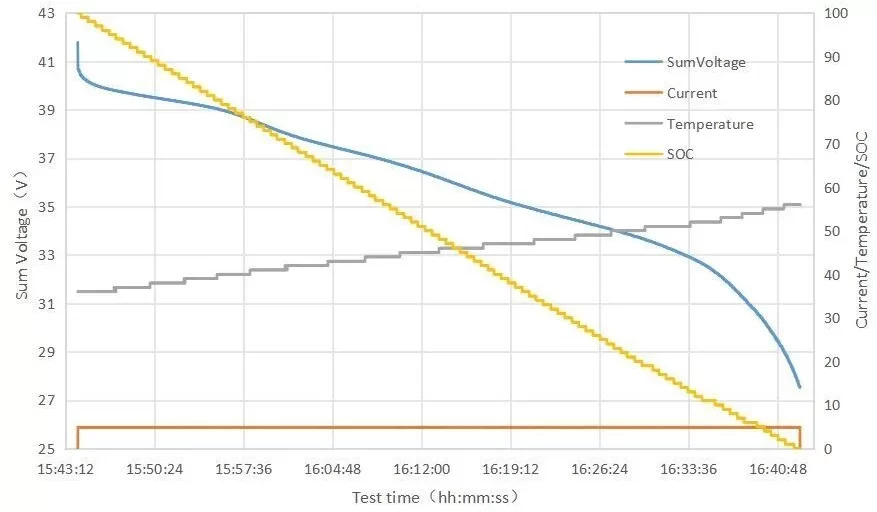
High-performance EV use means sustained high current, and current makes heat. A larger cell has more internal volume relative to its outer surface, so heat generated at the core takes longer to reach the casing where a cooling system can carry it away. The 21700 is not worse at this, but it does demand that you design cooling and current paths deliberately rather than assuming the casing will shed heat on its own.
In practice, that is why serious 21700 packs are liquid-cooled and why cell-level temperature monitoring is non-negotiable. The 18650's smaller mass per cell can make per-cell heat extraction slightly easier, which is one reason it remains common in very high continuous-discharge applications. Either way, the cell is only half the story: continuous output is set by how well the pack moves heat and how tightly the management system holds every cell in its safe window.
The BMS makes or breaks the format choice
Neither cell type delivers performance on its own. A pack is a population of cells that age, warm, and discharge at slightly different rates, and the job of keeping them balanced and inside safe limits belongs to the battery management system. With larger 21700 cells, an imbalance or a thermal event carries more energy, so the monitoring needs to be precise and fast. EVDrive's BetterBMS is built for exactly this: per-cell visibility, tight balancing, and protection that holds up under the loads a performance program actually sees.
This is also why you should never mix formats or chemistries within a series string. Cells with different internal resistance and capacity are forced to share current, which drives imbalance and uneven aging from day one. A pack should run one cell type, graded and matched, with a BMS sized to manage it.
Cost, supply, and maturity
The 18650 has been mass-produced longer, so its supply chain is deep and its catalog of specialized high-output chemistries is broad. The 21700 has become the volume format for new EV designs, and its cost per unit of energy has moved in the buyer's favor as production scaled. For a performance program, the deciding factors are usually availability of the exact chemistry you need, consistency between lots, and how the format fits your enclosure, rather than headline price alone.
The honest answer is that there is no universal winner. The 21700 is the sensible starting point for most high-performance EV batteries, and the 18650 remains the right tool for tight geometry or a particular chemistry. The decision is an engineering one, made against your real targets. If you want that decision made with you, you can start a quote conversation and tell us the application.
FAQ
Is the 21700 always better than the 18650 for EV batteries?
Not always. The 21700 holds more energy per cell and reduces parts count, which suits most performance EV packs. But the 18650 still wins where you need to fit cells around tight or irregular geometry, or where a specific high-output 18650 chemistry is the best match for the discharge profile.
What is the main advantage of 21700 cells over 18650 cells?
A single 21700 stores meaningfully more energy than an 18650, so a pack needs fewer cells, fewer welds, and fewer interconnects to hit the same capacity. That lowers assembly complexity and the number of potential failure points.
Do 21700 cells run hotter than 18650 cells?
A larger cell has more internal volume relative to its surface area, so heat takes longer to reach the casing. That is why high-performance 21700 packs are usually liquid-cooled and paired with a capable BMS that watches cell-level temperature.
Can the two cell formats be mixed in one pack?
No. Mixing formats or chemistries inside a series string forces cells with different internal resistance and capacity to share current, which drives imbalance and uneven aging. A pack should use one cell type, matched and graded.